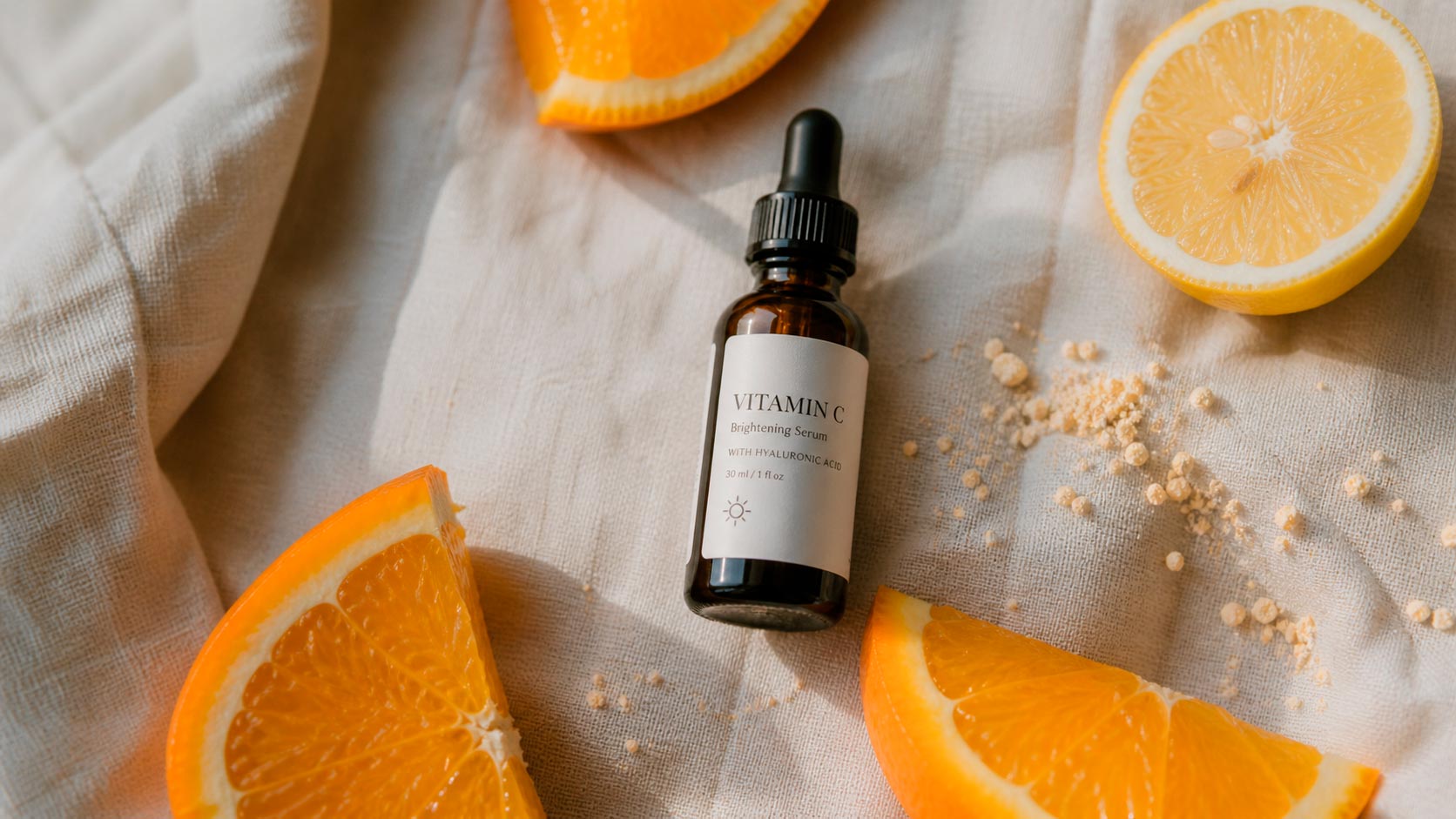
How to choose a vitamin C serum without overwhelming your skin
Vitamin C is one of the most well-known ingredients in contemporary skincare. Its popularity has grown enormously in recent years, and today it is part of many routines focused on radiance, antioxidants, and daily skin care.
However, not all vitamin C serums are created equal. Different formats, concentrations, and combinations of active ingredients can make a formula balanced and pleasant for the skin or, on the contrary, too intense for certain sensitivities.
Choosing a vitamin C serum should not be based solely on the highest percentage or immediate visible promises. The quality of the formula, stability, and skin tolerance are often much more important in the long run.
Because in skincare, more intensity doesn't always mean better results.
What vitamin C brings to the skin
Vitamin C is primarily used for its antioxidant capacity.
Within a facial routine, it can help to:
- provide radiance,
- visually improve the dull appearance of the skin,
- protect against oxidative stress,
- and complement a routine focused on prevention and balance.
That's why it is often found particularly in morning routines, combined with hydration and sun protection.
However, the user experience depends heavily on how the product is formulated and the individual tolerance of each skin type.
Why not all vitamin C serums work the same
One of the most important aspects is to understand that there are different derivatives and formats of vitamin C.
Some formulas use purer and more potent forms, while others incorporate more stable and gentle derivatives.
This directly influences:
- stability,
- oxidation,
- texture,
- tolerance,
- and skin experience.
In many cases, a balanced and well-tolerated formula can be more beneficial in the long run than an excessively intense serum that is difficult to maintain consistently.
What to consider before choosing a vitamin C serum
Your skin's sensitivity
Not all skin reacts the same way to antioxidants or concentrated active ingredients.
Sensitive or reactive skin often benefits from gentler, more balanced, and progressive formulas.
Incorporating too many active ingredients simultaneously can increase:
- sensitivity,
- redness,
- discomfort,
- or disruption of the skin barrier.
Therefore, it is advisable to prioritize tolerance and stability over extreme intensity.
The texture of the formula
The sensory experience also influences the consistency of the routine.
Some skin types prefer light and watery textures, while others appreciate more comfortable and hydrating serums.
A good formula should integrate easily into the routine without creating a heavy feeling or saturation.
Packaging and stability
Vitamin C is an ingredient particularly sensitive to light and air.
Therefore, the packaging directly influences the stability of the formula.
Opaque and well-protected formats help to preserve the product better and reduce the risk of premature oxidation.
When a serum changes color excessively or takes on an intense dark hue, it may indicate a loss of stability.
Routine consistency
One of the most common mistakes is incorporating vitamin C along with too many active ingredients simultaneously.
The skin usually responds better to simple and consistent routines than to excessive combinations of exfoliants, acids, and concentrated antioxidants.
In many cases, maintaining a few well-formulated products offers a more balanced and sustainable experience.
How to introduce vitamin C into your facial routine
The incorporation of new active ingredients should be done progressively.
In most cases, it is sufficient to:
- apply once daily,
- gradually observe tolerance,
- and maintain a stable surrounding routine.
Vitamin C is usually preferably used in the morning, accompanied by:
- hydration,
- and daily sun protection.
It is not necessary to combine multiple antioxidants or constantly increase the concentration to obtain an effective and balanced routine.
Higher concentration doesn't always mean a better serum
There is a certain tendency to associate high percentages with greater efficacy. However, a higher concentration does not always imply a better experience for the skin.
Factors such as:
- stability,
- formulation,
- tolerance,
- texture,
- and overall product coherence
are often much more important.
Many skin types respond better to gentle and consistent formulas than to excessively aggressive active ingredients that are difficult to maintain over time.
Stability and consistency usually offer better results than occasional intensity.
Choosing cosmetics also means understanding how your skin responds
There is no single perfect serum for everyone.
The best choice will depend on:
- skin sensitivity,
- the rest of the routine,
- the level of tolerance,
- and the experience we seek to build around skincare.
Listening to how your skin responds and simplifying when necessary is often much more useful than constantly chasing more intense formulas or more complex routines.
Because conscious care also involves choosing products that the skin can maintain with balance and comfort.